Here's a breakdown:
* Genes: These are the units of heredity, responsible for passing traits from parents to offspring.
* Population: A group of individuals of the same species living in a particular area.
* Change: This can involve the frequency of existing genes changing or new genes appearing.
Evolution is driven by several key mechanisms:
* Natural Selection: Individuals with traits better suited to their environment are more likely to survive and reproduce, passing on those advantageous traits.
* Genetic Drift: Random changes in gene frequencies, especially common in small populations.
* Gene Flow: The movement of genes between populations, introducing new genetic variations.
* Mutation: Changes in DNA sequences that can introduce new genes or alter existing ones.
Evolutionary change can be observed in many ways:
* Fossil Record: Examining fossils of extinct species can reveal how life has changed over time.
* Comparative Anatomy: Similarities and differences in the anatomy of different species suggest common ancestry.
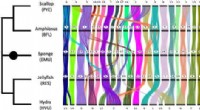
* Molecular Biology: Comparing DNA sequences can help understand evolutionary relationships between organisms.
Understanding evolution is essential for studying biology, medicine, and even human history.