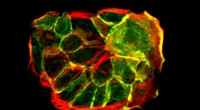
1. Genetic Blueprint:
* DNA contains the genetic instructions for all cellular functions, including cell division.
* Each chromosome is made up of a single DNA molecule tightly packed with proteins.
2. Replication Before Division:
* Before mitosis begins, the DNA in the parent cell must be replicated. This creates two identical copies of each chromosome.
* This process ensures that each daughter cell receives a complete set of genetic information.
3. Chromosomes Condense and Align:
* During the early stages of mitosis, replicated chromosomes condense and become visible under a microscope.
* They align at the center of the cell, ensuring equal distribution to the daughter cells.
4. Separation of Chromosomes:
* During mitosis, the replicated chromosomes are separated and pulled to opposite ends of the cell by microtubule fibers.
* This process ensures that each daughter cell receives one copy of each chromosome.
5. Formation of Daughter Cells:
* After the chromosomes separate, the cell divides into two daughter cells.
* Each daughter cell has a full set of chromosomes and genetic information, identical to the parent cell.
Overall, DNA is the master blueprint for mitosis. It provides the genetic instructions and ensures accurate duplication of chromosomes, leading to the creation of two genetically identical daughter cells. This process is essential for growth, repair, and development in multicellular organisms.