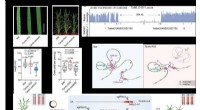
Before the discovery, scientists understood that DNA carried genetic information, but they didn't know how this information was copied and transmitted to daughter cells during cell division. The discovery of the replication mechanism, particularly the semi-conservative model, provided the answer:
* DNA replicates semi-conservatively: Each strand of the DNA double helix serves as a template for the synthesis of a new complementary strand. This ensures that each daughter cell receives one original strand and one newly synthesized strand, preserving the genetic information.
The understanding of DNA replication also led to a deeper understanding of:
* How mutations occur: Errors during replication can introduce changes in the DNA sequence, leading to mutations.
* The basis of inheritance: The accurate replication of DNA ensures that offspring inherit the genetic material from their parents.
* The potential for genetic engineering: The knowledge of DNA replication allows scientists to manipulate the genetic code, leading to advancements in medicine and biotechnology.
In essence, the discovery of the DNA replication mechanism revolutionized our understanding of genetics and opened the door to countless scientific advancements.