1. Specificity of Interactions:
* Enzyme-Substrate Interactions: Enzymes are biological catalysts that accelerate specific chemical reactions. Their active sites are uniquely shaped to bind to specific substrate molecules. This "lock and key" model ensures that the enzyme only interacts with its intended substrate, leading to highly efficient and controlled reactions.
* Ligand-Receptor Binding: Ligands, like hormones or neurotransmitters, bind to specific receptors on cell surfaces. The shape of the ligand determines which receptor it will bind to, triggering specific cellular responses.
* Antibody-Antigen Recognition: Antibodies, part of the immune system, bind to specific antigens, like bacteria or viruses. The unique shape of an antibody's binding site allows it to recognize and neutralize specific threats.
2. Function and Activity:
* Protein Folding: The shape of a protein is determined by its amino acid sequence and interactions between amino acids. This intricate 3D structure dictates the protein's function. For example, a protein's shape can form a channel for transport, a binding site for another molecule, or an active site for catalysis.
* DNA Structure: The double-helix shape of DNA allows for efficient storage and replication of genetic information. The specific base pairing (A-T and C-G) is dictated by their shapes, ensuring accurate DNA copying.
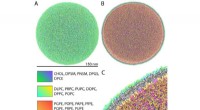
* Lipid Bilayers: The shape of phospholipid molecules, with their hydrophilic heads and hydrophobic tails, forms the basis of cell membranes. This structure creates a barrier that regulates the passage of molecules into and out of cells.
3. Molecular Recognition:
* Cell Signaling: The shape of signaling molecules allows them to bind to specific receptors on other cells, initiating signaling cascades and triggering cellular responses.
* Immune Response: The shape of antigens determines which antibodies will bind to them, facilitating the immune system's ability to recognize and target foreign invaders.
4. Structural Integrity:
* Collagen: The fibrous structure of collagen, a protein found in connective tissues, provides strength and support to various tissues like skin, tendons, and bones.
* Cytoskeleton: The protein filaments of the cytoskeleton, like microtubules and actin filaments, maintain the shape of cells and facilitate movement.
In essence, the shape of a molecule is a key determinant of its function and interaction within a complex biological system. This is why molecular shape plays such a crucial role in determining the behavior of biological systems and in understanding the basis of life itself.