Here's why:
* Muscle fibers: Muscles are made up of long, cylindrical cells called muscle fibers.
* Myofibrils: Inside each muscle fiber are bundles of smaller protein filaments called myofibrils.
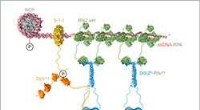
* Actin and Myosin: The myofibrils are composed of two main proteins: actin and myosin. These proteins are arranged in a specific way that allows for muscle contraction.
While proteins are the primary component, muscle also contains other macromolecules in smaller amounts:
* Carbohydrates: Used as an energy source for muscle contraction.
* Lipids (fats): Provide insulation and energy storage.
* Nucleic acids (DNA and RNA): Carry genetic information for muscle development and function.
In short, proteins are the building blocks of muscle, and their interaction is responsible for muscle movement.