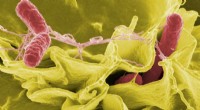
* Increased resistance to diseases: A mutation that makes an organism immune to a specific disease would be beneficial.
* Improved ability to find food: A mutation that enhances the sense of smell or sight could help an animal find food more easily.
* Enhanced camouflage: A mutation that changes the color or pattern of an organism's skin or fur could make it better camouflaged from predators.
* Greater tolerance to harsh environmental conditions: A mutation that allows an organism to withstand extreme temperatures, drought, or pollution could be beneficial in certain environments.
* Increased reproductive success: A mutation that improves fertility or makes an organism more attractive to mates could lead to greater reproductive success.
It's important to note that the beneficial nature of a mutation is context-dependent and depends on the specific environment. A mutation that is beneficial in one environment might be harmful in another.
Here are some examples of famous beneficial mutations:
* Lactose tolerance: A mutation that allows adults to digest lactose, a sugar found in milk, was beneficial in societies that relied heavily on dairy products.
* Sickle cell anemia: While the sickle cell trait itself is a genetic disorder, it also provides resistance to malaria, a deadly disease prevalent in some parts of the world.
* Antibiotic resistance: In bacteria, mutations that confer resistance to antibiotics are a major concern in healthcare. However, from the perspective of the bacteria, these mutations are beneficial, allowing them to survive in the presence of antibiotics.
While beneficial mutations are important for evolution, they are relatively rare. Most mutations are either neutral or harmful, and they play a key role in the process of natural selection.