Here's how it works:
* Directional Selection: This type of selection pushes the population's average trait value in a specific direction over time. It favors individuals with phenotypes that are at one extreme of the range of variation.
Examples of Directional Selection:
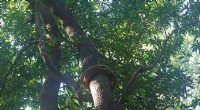
* Peppered Moths: The classic example is the peppered moth. In pre-industrial England, light-colored moths were more common because they blended in with the lichen-covered trees. However, with the Industrial Revolution, soot and pollution darkened the trees, making dark-colored moths better camouflaged. Over time, the population shifted towards having more dark-colored moths.
* Antibiotic Resistance: When antibiotics are used, bacteria that are naturally resistant to the antibiotic have a survival advantage. This leads to a directional shift in the bacterial population, with more resistant strains becoming dominant.
Key Points:
* Directional selection is one of the three main types of natural selection, along with stabilizing selection and disruptive selection.
* It can lead to significant changes in a population's phenotype over time.
* It is driven by environmental pressures that favor one extreme phenotype over others.