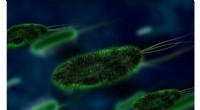
1. Replication: The bacterium's single circular chromosome replicates, creating two identical copies.
2. Elongation: The cell elongates, and the two replicated chromosomes move to opposite ends of the cell.
3. Septum Formation: A new cell wall, called a septum, begins to form between the two chromosomes, eventually dividing the cell into two identical daughter cells.
4. Division: The septum completely forms, and the two daughter cells separate, each containing a complete copy of the original bacterium's DNA.
This process is relatively fast, with some bacteria able to divide every 20 minutes under optimal conditions. Here's a simplified visual:
[Image of a bacterium undergoing binary fission]
Key points to remember:
* Asexual Reproduction: Binary fission is asexual, meaning that no genetic exchange occurs between parent and offspring.
* Genetic Variation: While binary fission produces genetically identical offspring, bacteria can acquire genetic variation through other mechanisms like horizontal gene transfer. This includes processes like conjugation, transformation, and transduction.
* Environmental Factors: Bacterial growth and division are influenced by factors such as nutrient availability, temperature, pH, and oxygen levels.
Understanding binary fission is essential for comprehending bacterial growth, antibiotic action, and other aspects of bacterial biology.