* It's relatively large: The nucleus is the largest organelle in most cells, making it easier to distinguish from other structures.
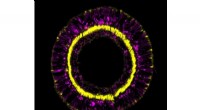
* It has a distinct shape and structure: The nucleus is usually spherical or oval-shaped and is enclosed by a double membrane called the nuclear envelope. This membrane is easily visible under the microscope.
* It's dense and contains genetic material: The nucleus contains the cell's DNA, which is tightly packed into chromosomes. This density makes the nucleus appear darker than the surrounding cytoplasm.
* Staining techniques highlight it: Scientists use special dyes and stains that bind to the DNA and RNA in the nucleus, making it even more prominent and visible under the microscope.
However, it's important to note:
* Not all microscopes are powerful enough: You need a light microscope with high magnification (at least 400x) to see the nucleus clearly.
* The size and visibility of the nucleus can vary: The nucleus can be larger or smaller depending on the type of cell and its current activity.
* Other cell components can obscure the nucleus: If a cell is densely packed with other organelles, the nucleus may be harder to see.
Overall, by using a powerful microscope and appropriate staining techniques, you can clearly see the nucleus and its important role as the control center of the cell.