Here's a breakdown:
Water:
* Higher thermal conductivity: Water conducts heat away from the body much faster than air. This means heat travels through water more readily, leading to quicker cooling.
* Higher specific heat capacity: Water requires more energy to raise its temperature than air. This means it can absorb a lot of heat from the body without experiencing a large temperature change itself.
* Greater density: Water is denser than air, leading to greater contact between the water and the organism's skin, allowing for faster heat transfer.
* Convection: Water is more effective at carrying heat away from the body through convection. The movement of water molecules facilitates the transfer of heat from the body to the surrounding water.
Air:
* Lower thermal conductivity: Air conducts heat much slower than water, meaning it doesn't pull heat away from the body as efficiently.
* Lower specific heat capacity: Air heats up more quickly than water, meaning it can't absorb as much heat from the body before experiencing a large temperature change.
* Lower density: Air is less dense than water, resulting in less contact between the air and the organism's skin, leading to slower heat transfer.
* Convection: Air convection is less effective than water convection, meaning it's less efficient at carrying heat away from the body.
Implications for organisms:
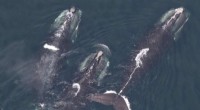
* Aquatic organisms: Living in water, these organisms must have adaptations to cope with the rapid heat loss. They often have a higher metabolic rate to generate heat, and some species have thick layers of blubber or fur for insulation.
* Terrestrial organisms: Living in air, these organisms face less extreme heat loss. However, they can still experience significant heat loss in cold environments, and they have developed adaptations like feathers, fur, and shivering to maintain body temperature.
In summary: Water is a much more efficient conductor of heat than air. This means that organisms living in water face a greater challenge in maintaining their body temperature compared to those living on land.