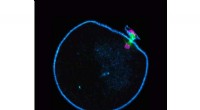
* Size: While the nucleus is a relatively large organelle within a cell, it's still too small to be seen with the naked eye. A light microscope provides the necessary magnification to view its structure.
* Resolution: Light microscopes offer sufficient resolution to distinguish the nucleus from other cellular components.
While electron microscopes (TEM and SEM) provide much higher resolution and can reveal incredibly detailed structures, they are not ideal for studying the nucleus in its natural state:
* Preparation: Electron microscopy requires extensive sample preparation, often involving fixing, staining, and slicing the specimen, which can distort the structure of the nucleus.
* Living Cells: Electron microscopes are not suitable for observing living cells.
Therefore, a light microscope is the preferred tool for studying the nucleus in its natural context within a living or preserved cell.