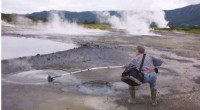
* Hydrothermal vents: These underwater volcanoes release chemicals that could have provided energy for early life forms.
* Shallow water: The warm, shallow waters of the early Earth would have been rich in nutrients and exposed to sunlight, making them ideal for photosynthetic organisms.
* Tidal pools: These pools of water, trapped between rocks at low tide, would have provided a sheltered environment for early life.
It's important to note that these are just theories, and the exact location where life originated is still unknown. The conditions on early Earth were very different from today, and scientists are constantly discovering new clues that shed light on the origins of life.
Some of the key characteristics of the environment where early life probably thrived include:
* Presence of water: Water is essential for all life forms, and early life forms were likely aquatic.
* Presence of nutrients: Early organisms needed a source of energy and building blocks, such as carbon, nitrogen, and phosphorus.
* Moderate temperature: Life needs a certain range of temperatures to survive, and early Earth likely had a relatively warm climate.
* Protection from harmful radiation: The early Earth's atmosphere was very thin, and ultraviolet radiation from the sun was intense. Early organisms may have lived in places that were sheltered from this radiation.
Scientists continue to explore these theories and search for evidence to support them. It's an exciting field of research that may one day provide a definitive answer to the question of where life originated.