Here's a breakdown:
Places where life is found:
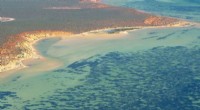
* Oceans: From the surface to the deepest trenches, the ocean is teeming with life, from microscopic plankton to giant whales.
* Land: From deserts to rainforests, mountains to plains, life thrives in a wide range of terrestrial environments.
* Air: While not a habitat in itself, the air is filled with bacteria, fungi, and other microorganisms.
* Ice: Life has been found in glaciers and even in ice cores from Antarctica, showing incredible adaptation to extreme cold.
* Hot Springs: Microorganisms known as extremophiles have been found thriving in the extremely hot, often acidic, waters of volcanic hot springs.
* Deep underground: Life has been discovered in deep underground caves and even in rock formations thousands of meters below the surface.
Places where life is thought to be absent (but this is still being researched):
* Deepest parts of the ocean: Some of the deepest trenches, with extremely high pressure and lack of sunlight, are considered unlikely to support life.
* Volcanic vents: While some extremophiles thrive in volcanic environments, the most intense volcanic vents may be too harsh.
* The very upper atmosphere: The extreme conditions of the upper atmosphere (low pressure, high radiation) are thought to be too difficult for life to survive.
Key Points:
* Life is incredibly adaptable: Life on Earth has demonstrated the ability to thrive in an astonishing array of conditions.
* We still don't know everything: The constant discovery of new species and the exploration of previously unexplored environments means our understanding of life's limits is constantly evolving.
While the statement that "almost all parts of Earth support some living organism" is a good generalization, it's crucial to remember that we're still learning about the incredible diversity and adaptability of life on Earth.