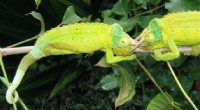
* Disruptive selection favors extreme phenotypes: It selects against intermediate traits, pushing a population towards two or more distinct phenotypes.
* Reproductive isolation: As these extreme phenotypes become more common, they may be less likely to interbreed with the original population or with each other. This can lead to reproductive isolation, a key factor in speciation.
Let's break down how this works:
1. Initial population with variation: Imagine a population of birds with a range of beak sizes.
2. Environmental change: Let's say the environment changes, offering two distinct food sources: small, soft seeds and large, hard seeds.
3. Disruptive selection: Birds with beaks suited for either small seeds or large seeds will be more successful at finding food and reproducing. Birds with intermediate beak sizes will be less successful.
4. Over time: The population splits into two groups with distinct beak sizes, adapted to different food sources.
5. Reproductive isolation: If the two groups become sufficiently different, they may no longer interbreed, even if they are geographically close. This can lead to the formation of two separate species.
Other forms of natural selection and speciation:
* Directional selection: This favors one extreme phenotype, potentially leading to changes within a species but less likely to directly cause speciation.
* Stabilizing selection: This favors the average phenotype, reducing variation and potentially making speciation less likely.
Important note: While disruptive selection is often considered the primary driver of speciation, it's important to remember that speciation is a complex process that can be influenced by various factors, including genetic drift, gene flow, and geographic isolation.