Here's what scientists believe about the first organism:
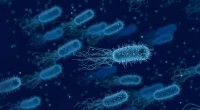
* Simple and Single-Celled: It was likely a very simple, single-celled organism, possibly resembling a bacteria or archaea.
* Prokaryotic: It lacked a nucleus and other membrane-bound organelles found in more complex cells.
* Heterotrophic: It likely obtained energy by consuming organic molecules present in the environment, rather than producing its own food through photosynthesis.
* Anaerobic: Early Earth's atmosphere lacked oxygen, so this first organism would have survived without it.
What we don't know:
* Exact shape and size: We have no fossil evidence of this very first organism.
* Specific metabolic pathways: It's unclear exactly how it obtained energy or what molecules it used for its metabolism.
* How it originated: We don't know the exact steps involved in the transition from non-living matter to the first living organism.
The Search for Answers:
Scientists continue to explore these questions through studying:
* Fossils: While the very first organism might not have left behind recognizable fossils, studying ancient rock formations and microfossils provides insights into the early evolution of life.
* Genetics: Analyzing the genomes of modern organisms can reveal clues about the common ancestor of all life.
* Laboratory Experiments: Researchers recreate conditions similar to early Earth in labs to see if they can produce simple life forms from inorganic matter.
While the exact appearance of the first organism remains a mystery, the ongoing research helps us understand the fascinating journey of life on Earth.