* Monera (Prokaryotes):
* Unicellular: Consist of single-celled organisms.
* No nucleus: Lack a true nucleus and other membrane-bound organelles.
* Simple: Have simple cell structure.
* Examples: Bacteria and archaea.
* Protista:
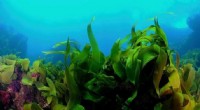
* Mostly unicellular: Though some are multicellular (like seaweed).
* Eukaryotic: Have a nucleus and other membrane-bound organelles.
* Diverse: Includes a wide variety of organisms, from algae to protozoa.
* Examples: Amoeba, Paramecium, Euglena, Algae.
* Fungi:
* Multicellular (except yeasts): Form complex structures like mushrooms, molds, and yeasts.
* Eukaryotic: Have a nucleus and other membrane-bound organelles.
* Heterotrophic: Obtain nutrients by absorbing organic matter from their surroundings.
* Examples: Mushrooms, molds, yeasts.
* Plantae (Plants):
* Multicellular: Form complex structures like trees, flowers, and grasses.
* Eukaryotic: Have a nucleus and other membrane-bound organelles.
* Autotrophic: Produce their own food through photosynthesis.
* Examples: Trees, flowers, grasses, ferns.
* Animalia (Animals):
* Multicellular: Form complex structures with specialized tissues and organs.
* Eukaryotic: Have a nucleus and other membrane-bound organelles.
* Heterotrophic: Obtain nutrients by consuming other organisms.
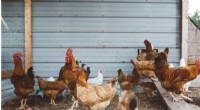
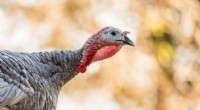
* Examples: Mammals, birds, reptiles, amphibians, fish, insects.
Here's a table summarizing their key differences:
| Characteristic | Monera (Prokaryotes) | Protista | Fungi | Plantae (Plants) | Animalia (Animals) |
|---|---|---|---|---|---|
| Cell Structure | Unicellular, no nucleus | Mostly unicellular, eukaryotic | Multicellular (except yeasts), eukaryotic | Multicellular, eukaryotic | Multicellular, eukaryotic |
| Nutrition | Heterotrophic or autotrophic | Heterotrophic or autotrophic | Heterotrophic (saprophytic) | Autotrophic (photosynthetic) | Heterotrophic |
| Reproduction | Asexual, binary fission | Asexual or sexual | Asexual or sexual | Asexual or sexual | Sexual |
| Examples | Bacteria, archaea | Amoeba, Paramecium, Euglena, Algae | Mushrooms, molds, yeasts | Trees, flowers, grasses, ferns | Mammals, birds, reptiles, amphibians, fish, insects |
Important note: The five-kingdom system is a traditional classification system. Newer classifications, like the three-domain system, group organisms based on more fundamental differences in cellular structures and evolutionary relationships.