1. All Living Organisms:
* Plants: From towering trees to microscopic algae, plants form the base of most food chains.
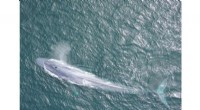
* Animals: All animal life, from the smallest insects to the largest whales, are part of the biosphere.
* Fungi: These decomposers play a crucial role in breaking down organic matter.
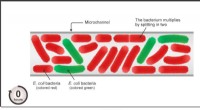
* Bacteria: Microscopic but mighty, bacteria perform essential roles like nitrogen fixation and decomposition.
* Protists: This diverse group includes single-celled organisms like amoebas and algae.
2. The Physical Environment:
* Atmosphere: The layer of gases surrounding Earth, providing oxygen and protecting us from harmful radiation.
* Hydrosphere: All the water on Earth, including oceans, lakes, rivers, and groundwater.
* Lithosphere: The Earth's solid, rocky outer layer, including soil and rocks.
3. Interactions and Relationships:
* Ecosystems: These are self-contained units where living organisms interact with their non-living environment. Examples include forests, deserts, and coral reefs.
* Food Chains and Webs: The interconnected pathways through which energy and nutrients flow between organisms.
* Biogeochemical Cycles: The continuous movement of elements (like carbon, nitrogen, and water) through the biosphere, atmosphere, hydrosphere, and lithosphere.
In essence, the biosphere is a complex and interconnected system where life and its environment are constantly interacting and influencing each other.