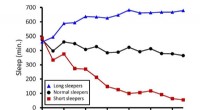
* The more you study, the higher your grade.
* The faster you drive, the greater the distance you cover in a given time.
* The hotter the temperature, the faster ice melts.
Here's a visual representation:
[Image of a graph with a line going up and to the right]
In this graph, the line shows a direct relationship. As the value of one variable increases along the x-axis, the value of the other variable increases along the y-axis.
Key Points:
* Positive correlation: Direct relationships are also known as positive correlations.
* Slope: The slope of the line in the graph represents the strength of the direct relationship. A steeper slope indicates a stronger relationship.
* Linear vs. Non-linear: A direct relationship can be linear (a straight line) or non-linear (a curved line).
* Cause and Effect: It's important to note that a direct relationship doesn't always mean cause and effect. While a change in one variable may be related to a change in the other, it might not be the direct cause. There might be other factors influencing the relationship.
Examples of Direct Relationships in Science:
* Physics: The relationship between force and acceleration (Newton's Second Law of Motion)
* Chemistry: The relationship between the concentration of a solution and its absorbance of light (Beer-Lambert Law)
* Biology: The relationship between the amount of sunlight and plant growth
Understanding direct relationships is crucial in scientific research. They help us to identify patterns, make predictions, and develop theories to explain the workings of the natural world.