1. Observation and Monitoring Tools:
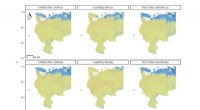
* Remote Sensing: Satellites and aircraft equipped with sensors capture images and data of Earth's surface, including vegetation cover, land use changes, and atmospheric conditions. Examples: Landsat, Sentinel, MODIS.
* Geographic Information Systems (GIS): Software tools used to analyze and visualize spatial data, allowing researchers to map and model biosphere processes.
* Field Observations: Direct observation and data collection in the field, including sampling, measurements, and species identification.
* Automated Monitoring Systems: Sensors and devices that continuously monitor environmental parameters like temperature, humidity, rainfall, and animal activity.
* Citizen Science: Engaging the public in data collection and observation, often through mobile apps and online platforms.
2. Analytical Tools:
* Molecular Biology Techniques: DNA sequencing, PCR, and other molecular techniques used to identify species, understand evolutionary relationships, and study genetic diversity.
* Biogeochemical Analysis: Techniques to measure the composition and cycling of nutrients and elements in the biosphere, including stable isotopes, radioisotopes, and elemental analysis.
* Mathematical and Statistical Models: Tools used to simulate and predict biosphere processes, including population dynamics, climate change impacts, and ecosystem services.
3. Other Tools:
* Microscopes: To study microscopic organisms and the structures of cells and tissues.
* Laboratory Equipment: Specialized equipment for chemical analysis, cell culture, and other experiments.
* Computer Simulation Software: Simulations of ecosystems and environmental processes, enabling scientists to study complex interactions and predict future scenarios.
Specific Examples of Tools:
* Transects and Quadrats: Used in field ecology to sample and measure biodiversity and species abundance.
* Acoustic Monitoring Devices: Record and analyze animal sounds to study species diversity, population size, and behavior.
* Climate Models: Used to predict future climate change scenarios and their impacts on the biosphere.
* Global Positioning Systems (GPS): Used for precise location tracking in the field and to map the distribution of species.
This is not an exhaustive list, and the tools used to study the biosphere continue to evolve and become more sophisticated. The choice of tools depends on the specific research question being asked and the scale of the study.