Key Points about Abiogenesis:
* It's a scientific hypothesis: Abiogenesis is not a fully proven theory, but a hypothesis based on scientific evidence and observations.
* It's a complex process: The exact steps and conditions that led to abiogenesis are still being investigated, and there's no single universally accepted model.
* It likely occurred in the early Earth: Scientists believe abiogenesis occurred on Earth billions of years ago, during a time when the planet's environment was vastly different from today.
* It involves the emergence of self-replicating molecules: One crucial step in abiogenesis is the emergence of molecules that can self-replicate, allowing for the inheritance of traits.
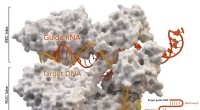
* It's an ongoing area of research: Scientists are actively studying various aspects of abiogenesis, including the formation of complex organic molecules, the role of RNA in early life, and the potential environments where life might have originated.
Here's a simplified analogy: Imagine a soup of simple inorganic molecules in a primordial environment. Over time, through chemical reactions and perhaps with the help of energy sources like lightning or volcanic activity, some of these molecules could have spontaneously assembled into more complex structures, like proteins or nucleic acids. If these complex structures were able to self-replicate, they could have then become the basis for the first living organisms.
While abiogenesis remains a mystery, scientific research is gradually unraveling the puzzle, offering valuable insights into the origins of life on Earth and potentially providing clues to the possibility of life elsewhere in the universe.