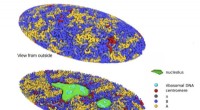
Models:
* Physical models: These are tangible representations of the object or phenomenon being studied. Examples include models of the solar system, airplanes, or DNA.
* Mathematical models: These use equations and other mathematical tools to describe the behavior of the object or phenomenon. Examples include models of climate change, population dynamics, or the spread of disease.
* Conceptual models: These are simplified representations of the object or phenomenon, often using diagrams or flow charts. Examples include models of the atom, the cell, or the ecosystem.
Simulations:
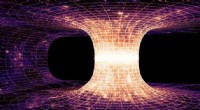
* Computer simulations: These use software to create virtual representations of the object or phenomenon, allowing scientists to test different scenarios and make predictions. Examples include simulations of black holes, volcanic eruptions, or the evolution of the universe.
Indirect observations:
* Telescopes: These allow scientists to observe objects that are too far away to study directly, such as stars and galaxies.
* Microscopes: These allow scientists to observe objects that are too small to see with the naked eye, such as bacteria and viruses.
* Remote sensing: This uses satellites or other instruments to collect data about the Earth's surface, atmosphere, or oceans.
Data analysis:
* Statistics: This helps scientists to analyze data and identify patterns and trends.
* Machine learning: This allows computers to learn from data and make predictions about the future.
Other techniques:
* Thought experiments: These are hypothetical scenarios that scientists use to explore different possibilities and test their theories.
* Analogy: This involves drawing comparisons between the object or phenomenon being studied and something that is better understood.
The specific tools and techniques used will depend on the object or phenomenon being studied and the research question being asked. However, all of these methods help scientists to understand the world around us, even when they cannot directly observe it.