The Second Law of Thermodynamics:
* This law states that in an isolated system, entropy (disorder) always increases over time. In simpler terms, things tend to fall apart, not become more complex.
* This seems at odds with life, which is characterized by increasing complexity and organization.
How Living Cells Seem to Contradict This:
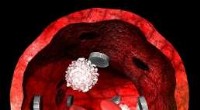
* Order from Disorder: Cells take simple molecules from their environment and build them into complex structures, defying the trend towards disorder. They create proteins, DNA, and even entire organelles, all of which contribute to the overall organization of the cell.
* Energy Input: Living cells are not isolated systems. They continuously take in energy from their surroundings, primarily through processes like photosynthesis (plants) or consuming food (animals). This energy input allows them to maintain and increase their internal order, even though they release some energy as heat, increasing the entropy of their surroundings.
* Self-Replication: Cells reproduce, creating more complex structures from existing ones. This seemingly defies the second law because it requires energy and the ability to overcome the natural tendency towards decay.
The Resolution of the Paradox:
* Open Systems: Living cells are not isolated systems; they exchange matter and energy with their environment. This is crucial for them to maintain and increase their internal order.
* Increased Entropy Overall: While living cells seem to decrease entropy within themselves, they contribute to a larger increase in entropy in their surroundings. For example, the energy released during cellular respiration increases the entropy of the environment.
* Evolution and Selection: The complex organization of life arises through evolution. Natural selection favors organisms that are better at capturing and utilizing energy, leading to the emergence of increasingly complex life forms over time.
In summary, living cells don't defy the laws of thermodynamics. Instead, they cleverly exploit them. They harness energy from their surroundings to maintain and increase their internal order, while contributing to a larger increase in entropy in the overall system.