The development of different cell types in an embryo, a process known as cell differentiation, is a remarkable journey orchestrated by a series of intricate molecular mechanisms. Let's break it down:
1. The Starting Point: The Zygote
- The journey begins with a single cell, the zygote, formed by the fusion of a sperm and an egg.
- This zygote carries all the genetic information needed to create a complete organism.
2. Early Divisions and Specialization
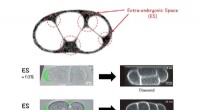
- The zygote undergoes rapid cell divisions, creating a ball of identical cells called a blastocyst.
- Within the blastocyst, cells start to specialize, taking on different roles and forming distinct cell lineages.
3. Master Regulators: Transcription Factors
- This specialization is driven by transcription factors, proteins that bind to DNA and regulate gene expression.
- Different transcription factors are activated in different cells, leading to the expression of specific genes that determine cell fate.
4. Signaling Pathways: Communication is Key
- Cells communicate with each other via signaling pathways.
- These pathways involve molecules that act as messengers, influencing the behavior and differentiation of neighboring cells.
5. Epigenetic Modifications: Switching Genes On and Off
- Epigenetic modifications are chemical tags that affect gene expression without altering the DNA sequence.
- These modifications, like methylation and histone modifications, play a crucial role in determining which genes are active or inactive in specific cell types.
6. Feedback Loops: A Complex Dance
- Cell differentiation is a highly regulated process involving feedback loops.
- Cells produce signals that influence their own differentiation and the fate of other cells, creating a complex network of interactions.
7. Stem Cells: The Building Blocks
- Stem cells are undifferentiated cells that can divide and differentiate into specialized cell types.
- They provide a continuous source of cells for growth and tissue repair throughout life.
8. Organ Formation: From Tissues to Organs
- As cells differentiate, they start to assemble into tissues, groups of similar cells performing a specific function.
- Different tissues then interact and organize to form organs, complex structures responsible for specific tasks within the body.
9. Final Stages: Cell Maturation and Function
- Once cells differentiate into their final form, they undergo further maturation to become fully functional.
- This process may involve changes in cell size, shape, and the production of specialized molecules.
Overall, cell differentiation is a complex and dynamic process that relies on a precise interplay of genetic, epigenetic, and environmental factors. It's a testament to the remarkable ability of life to create diverse and specialized cell types from a single starting point.