* Universality: DNA is the universal genetic code for all life on Earth, from bacteria to humans. This suggests a common ancestor for all life.
* Shared Ancestry: The more closely related two species are, the more similar their DNA sequences. This is because they share a more recent common ancestor, and their DNA has had less time to diverge through mutations. For example, humans and chimpanzees share about 98.8% of their DNA.
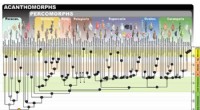
* Evolutionary History: Differences in DNA sequences can be used to reconstruct the evolutionary history of organisms. By comparing DNA, we can see how species have changed over time and how they are related to each other.
* Molecular Clocks: The rate of DNA mutations is relatively constant. This allows scientists to use DNA sequences to estimate the time since two species diverged from a common ancestor, like a molecular clock.
Here's an analogy: Imagine you have two families with similar last names, but different middle names. This suggests they share a common ancestor, but have diverged over time. The more similar their middle names are, the closer they are related. DNA is like a detailed family history book, revealing shared ancestry and evolutionary relationships.
Other important evidence:
* Fossil record: Provides physical evidence of past life and how organisms have changed over time.
* Biogeography: The distribution of species across the globe provides evidence for how species have migrated and adapted to different environments.
* Comparative anatomy: Similarities in the structure of different organisms, such as the bones in a whale fin and a human hand, indicate shared ancestry.
* Embryology: Similarities in the early development of different organisms point to shared evolutionary history.
The evidence from DNA sequences is particularly powerful because it provides a direct, molecular link between organisms, allowing scientists to reconstruct the evolutionary history of life on Earth with increasing precision.