Here's a breakdown of the structural components of nucleic acids:
1. Nucleotides:
- The basic building blocks of nucleic acids are nucleotides.
- Each nucleotide consists of three components:
- A phosphate group: A negatively charged molecule that provides structural support and participates in chemical reactions.
- A five-carbon sugar: This sugar can be either deoxyribose (in DNA) or ribose (in RNA).
- A nitrogenous base: This is a nitrogen-containing molecule that provides the genetic information. There are five primary bases found in nucleic acids:
- Adenine (A) and Guanine (G) are purines, with a double-ring structure.
- Cytosine (C), Thymine (T), and Uracil (U) are pyrimidines, with a single-ring structure.
- Note that thymine (T) is only found in DNA, while uracil (U) is only found in RNA.
2. Polynucleotide Chains:
- Nucleotides link together to form long chains known as polynucleotides.
- The linkage between nucleotides involves a phosphodiester bond. This bond is formed between the phosphate group of one nucleotide and the sugar of the next nucleotide.
- The sequence of bases in a polynucleotide chain determines the genetic information.
3. Double Helix (DNA):
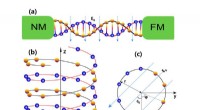
- DNA is a double-stranded molecule. The two strands are held together by hydrogen bonds between complementary base pairs:
- Adenine (A) always pairs with thymine (T) via two hydrogen bonds.
- Guanine (G) always pairs with cytosine (C) via three hydrogen bonds.
- The two strands are antiparallel, meaning they run in opposite directions (5' to 3' and 3' to 5').
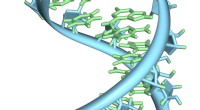
- The double helix is twisted, forming a helical structure that resembles a twisted ladder.
4. Single-stranded (RNA):
- RNA is generally single-stranded, although it can fold into complex three-dimensional structures.
- The base pairings in RNA follow similar rules as DNA, except uracil (U) replaces thymine (T) in pairing with adenine (A).
To summarize:
- Nucleotides are the building blocks of nucleic acids.
- Polynucleotides are chains of nucleotides linked by phosphodiester bonds.
- DNA is a double-stranded helix, held together by complementary base pairing between A-T and G-C.
- RNA is usually single-stranded, but can fold into complex structures, and uses U instead of T for pairing with A.
These structures provide the framework for the essential functions of DNA and RNA: storing and transmitting genetic information, encoding protein synthesis, and regulating gene expression.