1. Experimental Investigations: These involve manipulating variables to observe the effect on a dependent variable. They are characterized by:
- Controlled Variables: Some aspects of the experiment are kept constant to isolate the effect of the manipulated variable.
- Independent Variable: The factor that is changed by the researcher.
- Dependent Variable: The factor that is measured or observed in response to changes in the independent variable.
- Control Group: A group that does not receive the treatment or manipulation, serving as a baseline for comparison.
- Data Analysis: Results are analyzed statistically to determine if the observed changes are significant.
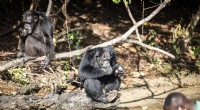
2. Observational Investigations: These involve observing and recording data without manipulating variables. They are used to:
- Describe Patterns: Identify trends or relationships between variables.
- Gather Information: Collect data about a phenomenon or system.
- Generate Hypotheses: Develop potential explanations for observed phenomena.
- Study Ethical or Practical Constraints: Investigate situations where experimental manipulation is not feasible.
These are just two broad categories, and there are many variations within each type. For example, observational investigations can be further categorized as descriptive (simply recording observations) or comparative (comparing different groups or conditions).