* Evolution is a continuous process: Evolution doesn't happen in neat, discrete steps with clearly defined "transitional" organisms. It's a gradual process with countless intermediate forms, many of which are extinct and unknown to us.
* Fossil record is incomplete: We only have fragments of the fossil record, making it impossible to find a complete "chain" of organisms.
* Evolution is a branching process: Life doesn't evolve in a straight line. There are many branches and lineages, making it difficult to select just 16 "representatives."
However, we can discuss some key lineages and organisms that demonstrate important evolutionary steps:
1. Early Life:
* Prokaryotes: Single-celled organisms like bacteria and archaea, some of the earliest forms of life on Earth.
* Cyanobacteria: Photosynthetic bacteria that released oxygen into the atmosphere, paving the way for complex life.
2. Eukaryotes:
* Single-celled eukaryotes: Organisms with a nucleus and other internal structures, like amoebas and algae.
* Multicellularity: The evolution of multicellularity, leading to the first simple animals and plants.
3. Invertebrates:
* Sponges: Simple, filter-feeding animals that represent an early stage of animal evolution.
* Cnidarians: Animals like jellyfish and corals, exhibiting a more complex body structure with tissues and specialized cells.
* Annelids: Segmented worms, showing the development of a body plan with repeating segments.
* Arthropods: Insects, crustaceans, spiders, and other diverse animals with hard exoskeletons and jointed legs.
4. Vertebrates:
* Fish: First vertebrates, with a backbone, gills, and fins.
* Amphibians: Animals that evolved from fish and can live both in water and on land.
* Reptiles: Adapted for life on land, with scales and amniotic eggs.
* Mammals: Animals that evolved from reptiles, characterized by mammary glands and fur.
5. Primates:
* Early primates: Small, tree-dwelling mammals that gave rise to modern primates.
* Hominoids: Larger apes, including chimpanzees, gorillas, and orangutans.
6. Hominins:
* Australopithecines: Early hominins, like "Lucy," walking upright on two legs.
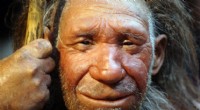
* Homo genus: Our own genus, including species like Homo habilis, Homo erectus, and Homo sapiens.
Instead of a fixed list of 16 organisms, it's more accurate to view evolution as a continuous story, where each organism is a link in a vast and complex web of life.