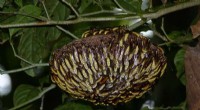
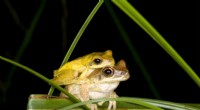
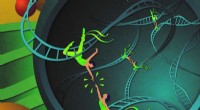
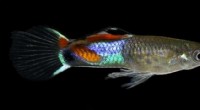
* Variation: Organisms within a population have inherent variations in their traits. These variations arise from mutations and genetic recombination.
* Differential survival and reproduction: The environment presents challenges and resources that favor certain traits over others. Organisms with traits that make them better adapted to their environment are more likely to survive, find mates, and reproduce successfully.
* Inheritance: The favorable traits that helped an organism survive and reproduce are passed on to their offspring, increasing the frequency of those traits in the next generation.
Examples:
* Camouflage: In a forest, a moth with a coloration that blends into the bark will be less likely to be eaten by predators than a moth with a bright, contrasting color. This camouflage trait gives the moth a survival advantage, allowing it to reproduce and pass on its genes.
* Disease resistance: A plant that possesses a gene conferring resistance to a common disease will be more likely to survive and produce seeds, passing on this beneficial trait to future generations.
In essence, the environment acts as a filter, favoring organisms with traits that enhance their chances of survival and reproduction. This process, known as natural selection, leads to the evolution of populations over time.
It's important to note that:
* The environment is constantly changing, and what is considered "favorable" can shift.
* Selection can act on any heritable trait, from physical characteristics to behavioral patterns.
* Natural selection is a gradual process, and significant changes in a population can take many generations.