Here are some examples of organisms belonging to the domain Eukarya:
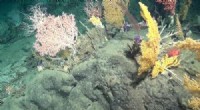
* Animals: All multicellular animals, from sponges to humans, are eukaryotes.
* Plants: Trees, flowers, ferns, mosses, and all other plants are eukaryotes.
* Fungi: Mushrooms, yeasts, molds, and other fungi are eukaryotes.
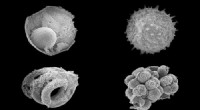
* Protists: This diverse group includes single-celled organisms like amoebas, algae, and slime molds.
Here's a breakdown of the major kingdoms within the domain Eukarya:
* Animalia: Multicellular organisms that are heterotrophic (obtain food from other organisms), mobile, and generally have complex organ systems.
* Plantae: Multicellular organisms that are photosynthetic (make their own food), have cell walls, and are mostly immobile.
* Fungi: Heterotrophic organisms that obtain food by absorbing nutrients from their surroundings, usually through decomposition.
* Protista: A diverse group of mostly single-celled eukaryotic organisms that are not classified as animals, plants, or fungi.
It's important to note that this is a simplified overview. The classification of eukaryotic organisms is constantly evolving as scientists learn more about them.