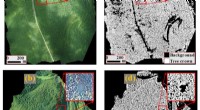
1. Capturing Sunlight: Plants have specialized cells called chloroplasts that contain a green pigment called chlorophyll. Chlorophyll absorbs sunlight, primarily the red and blue wavelengths, which is the energy source for photosynthesis.
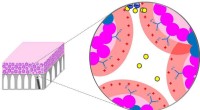
2. Taking in Carbon Dioxide: Plants take in carbon dioxide (CO2) from the air through tiny pores called stomata on their leaves.
3. Splitting Water: Plants also absorb water (H2O) from the soil through their roots. Sunlight provides the energy to split the water molecules into hydrogen (H) and oxygen (O).
4. Creating Glucose: The energy from sunlight is used to combine the carbon dioxide with the hydrogen to create glucose. This is a simple sugar that acts as food for the plant. The oxygen is released back into the atmosphere as a byproduct.
The Chemical Equation:
The entire process can be represented by this simplified chemical equation:
6CO2 (carbon dioxide) + 6H2O (water) + sunlight energy → C6H12O6 (glucose) + 6O2 (oxygen)
What happens to the glucose?
* Energy: The glucose is used as a source of energy for the plant's growth, development, and all its functions.
* Storage: Plants store excess glucose as starch in their roots, stems, and seeds for later use.
* Building Blocks: Glucose is also used to build other important molecules like cellulose (for cell walls), proteins, and fats.
In summary, plants are amazing food factories that use sunlight, water, and carbon dioxide to create their own food in the form of glucose through photosynthesis.