Here's a breakdown:
* Phospholipids: These are the most abundant component of membranes. They have a unique structure with a hydrophilic (water-loving) head and two hydrophobic (water-fearing) tails. This structure allows them to form a bilayer, with the hydrophilic heads facing the watery environment inside and outside the cell, and the hydrophobic tails tucked in the middle, creating a barrier.
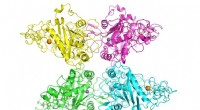
* Proteins: These are embedded within the phospholipid bilayer and serve various functions, such as transporting molecules across the membrane, acting as receptors for signals, and providing structural support.
* Cholesterol: This lipid is present in animal cell membranes and helps regulate membrane fluidity.
While phospholipids form the fundamental structure of biological membranes, proteins and other components are essential for their proper function.