* Natural Selection: The process where organisms with traits better suited to their environment are more likely to survive, reproduce, and pass on those advantageous traits.
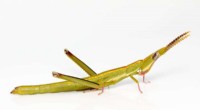
* Adaptations: These are inherited traits that increase an organism's chance of survival and reproduction in a specific environment. They can be physical (like camouflage), behavioral (like migration patterns), or physiological (like venom production).
Here's an example:
Imagine a population of rabbits living in a forest with a mix of brown and white rabbits. If the forest floor is mostly brown, the brown rabbits will be better camouflaged from predators and more likely to survive and reproduce. Over time, more brown rabbits will be born, leading to an increase in the proportion of brown rabbits in the population. This is an example of natural selection favoring a specific adaptation (brown fur) in a particular environment.
Key points to remember:
* Adaptations are specific to an environment. What is beneficial in one environment may not be beneficial in another.
* Natural selection acts on existing variations. It doesn't create new traits; it selects for traits that already exist within a population.
* Evolution is a gradual process. Changes occur over many generations.
Evolution by natural selection is a powerful force that shapes the diversity of life on Earth. It explains why organisms are so well-suited to their environments and why life continues to evolve and adapt.