1. Short Generation Times:
* Organisms that reproduce quickly and have many offspring per generation will experience more mutations and have a higher chance of beneficial mutations being spread throughout the population.
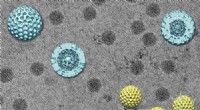
* Examples: Bacteria, viruses, insects
2. High Mutation Rates:
* Higher mutation rates mean more genetic variation within a population, providing more raw material for selection to act upon.
* Examples: Some viruses, certain bacteria
3. Strong Selective Pressure:
* Environments that change rapidly or have strong selective pressures (such as the presence of a new predator or a change in resource availability) can drive rapid evolution.
* Examples: Bacteria developing resistance to antibiotics, insects adapting to pesticides
4. Small Population Size:
* In smaller populations, genetic drift (random fluctuations in gene frequencies) can have a more significant impact, leading to rapid changes in allele frequencies.
* Examples: Isolated populations, endangered species
5. High Rates of Gene Flow:
* Gene flow, the movement of genes between populations, can introduce new genetic variation and accelerate evolution, particularly if the gene flow is from a population that has already adapted to the new environment.
* Examples: Migratory species, invasive species
6. Sexual Reproduction:
* Sexual reproduction shuffles genes through recombination, creating new combinations of alleles and increasing genetic diversity, which can facilitate adaptation.
* Examples: Most multicellular organisms
It's important to note that evolutionary rates are relative. Even organisms with short generation times and high mutation rates may not evolve quickly if there is little selective pressure or genetic variation. Conversely, organisms with longer generation times can still evolve rapidly under strong selection.
In summary, organisms with short generation times, high mutation rates, strong selective pressures, small population sizes, high gene flow, and sexual reproduction are most likely to undergo rapid evolution.