1. Comparative Anatomy & Morphology:
* Homologous Structures: These are structures that share a common origin, even if they have different functions. For example, the forelimbs of humans, bats, and whales are all homologous structures, as they are all derived from the same ancestral limb. This suggests a common ancestor.
* Analogous Structures: These are structures that have similar functions but different origins. For example, the wings of birds and insects are analogous structures, as they both allow for flight but developed independently. These structures do *not* indicate a recent common ancestor.
2. Molecular Evidence:
* DNA and Protein Sequences: Comparing the genetic sequences of different organisms can reveal similarities and differences. The more similar the sequences, the more closely related the organisms are likely to be.
* Genetic Markers: Specific genes or DNA regions can be used as markers to track evolutionary relationships. These markers can be traced back through lineages to identify common ancestors.
3. Fossil Evidence:
* Fossil Record: Finding fossils of extinct organisms that share traits with living organisms can help reconstruct evolutionary relationships. This evidence can also help date when species diverged from a common ancestor.
* Transitional Fossils: Fossils that show intermediate forms between two species can be strong evidence of a common ancestor. These fossils help fill in gaps in the fossil record and demonstrate the gradual evolution of traits.
4. Biogeography:
* Geographic Distribution: Examining the distribution of organisms around the world can reveal patterns of evolution and common ancestry. For example, the presence of similar species on different continents that were once connected suggests a common ancestor.
5. Developmental Biology:
* Embryonic Development: Comparing the embryonic development of different organisms can provide insights into their evolutionary relationships. Similar developmental patterns can suggest shared ancestry.
6. Phylogenetic Analysis:
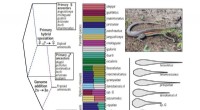
* Phylogenetic Trees: These diagrams illustrate evolutionary relationships among species based on shared traits. They are constructed using data from various sources, including morphology, genetics, and fossils.
Important Points:
* No single piece of evidence is definitive, and multiple lines of evidence are used to support claims of common ancestry.
* Evolutionary relationships are constantly being refined as new data becomes available.
* The process of identifying common ancestors is not about proving or disproving evolution, but rather about reconstructing the history of life on Earth.
Overall, the evidence from these diverse fields consistently points to a common ancestor for all life on Earth. While we may not be able to directly observe the initial divergence of life forms, the cumulative evidence provides a robust framework for understanding the evolutionary history of all organisms.