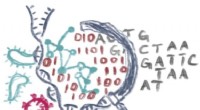
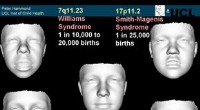
1. Variation: Inheritance explains the source of variation within a population. Genes, passed down from parents to offspring, determine traits. Mutations, changes in these genes, introduce new variations. This variation is essential for natural selection, as it provides the raw material upon which selection acts.
2. Heritability: Inheritance ensures that these variations are passed on to the next generation. If a particular trait provides an advantage in a given environment, the offspring inheriting that trait will be more likely to survive and reproduce. This means that favorable traits become more common in the population over time.
3. Differential Reproduction: Individuals with traits that enhance their survival and reproductive success in a particular environment are more likely to pass on those traits to their offspring. This differential reproduction, where some individuals leave more offspring than others, drives the process of natural selection.
Example:
Imagine a population of birds with varying beak sizes. Some have long beaks, others have short beaks. If the environment changes and only seeds with hard shells become available, birds with long beaks will have an advantage, as they can crack open the shells. They'll be more likely to survive and reproduce, passing on their long beak genes to their offspring. Over time, the population will shift towards having more birds with long beaks.
In summary:
* Inheritance provides the raw material for natural selection (variation).
* It ensures the passing on of favorable traits (heritability).
* This leads to differential reproduction, favoring those with advantageous traits, driving evolution.
Without the theory of inheritance, natural selection wouldn't have a mechanism to operate. The two theories are inextricably linked.