* Natural Sciences: This branch deals with the study of the natural world, encompassing living organisms, the Earth, and the universe. It is further divided into:
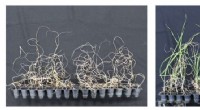
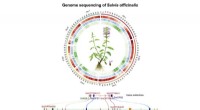
* Biology: The study of living organisms, their structure, function, growth, evolution, and distribution.
* Chemistry: The study of matter and its properties, as well as how matter changes.
* Physics: The study of the fundamental constituents of the universe and the laws that govern their behavior.
* Earth Sciences: The study of the Earth, its composition, structure, processes, and history. This includes geology, oceanography, meteorology, and climatology.
* Astronomy: The study of celestial objects and phenomena beyond Earth, such as stars, planets, galaxies, and the universe as a whole.
* Social Sciences: This branch focuses on the study of human society and its interactions, including human behavior, institutions, and relationships. It includes:
* Anthropology: The study of human societies, cultures, and their origins.
* Psychology: The study of the human mind, behavior, and mental processes.
* Sociology: The study of human societies, their structure, function, and interactions.
* Economics: The study of how people make choices under conditions of scarcity.
* Political Science: The study of government, political systems, and political behavior.
* History: The study of the past, using written and other sources.
* Formal Sciences: This branch deals with abstract systems of thought and formal systems. It includes:
* Mathematics: The study of numbers, shapes, and patterns, and their relationships.
* Logic: The study of valid reasoning and argumentation.
* Computer Science: The study of computation, algorithms, and the design and development of computer systems.
It's important to note that these divisions are not always strict, and there is often overlap between different branches of science. For example, biophysics combines principles from biology and physics, while astrobiology explores the possibility of life beyond Earth.





![Aerial Roots: How Plants Grow Above Ground | [Your Brand/Website Name]](https://www.scienceaq.com/article/uploadfiles/202210/2022102100370722_S.jpg)