1. Observation: This is the starting point of any scientific investigation. Scientists carefully observe the world around them, noting patterns, anomalies, and interesting phenomena.
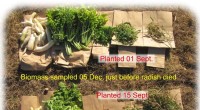
* Example: Observing that certain plants grow better in sunny areas than shady areas.
2. Question: Based on observations, scientists formulate a question about the observed phenomenon. This question should be specific, measurable, and answerable.
* Example: "Does sunlight affect plant growth?"
3. Hypothesis: This is a proposed explanation for the observation or a possible answer to the question. It should be testable and falsifiable, meaning it can be proven wrong.
* Example: "Plants exposed to more sunlight will grow taller than plants exposed to less sunlight."
4. Prediction: Based on the hypothesis, scientists make a prediction about the outcome of an experiment or observation.
* Example: "If we grow two groups of plants, one in sunlight and one in shade, the plants in sunlight will be taller."
5. Experiment: This is where scientists test their hypothesis through a controlled experiment. They manipulate variables, collect data, and analyze results.
* Example: Setting up two groups of plants, one in full sunlight and one in partial shade, controlling for other variables like water and soil, and measuring plant height over time.
6. Analysis: Scientists analyze the data collected during the experiment to draw conclusions about the hypothesis. They use statistical methods to determine if the results are statistically significant.
* Example: Analyzing the data and finding that the plants in sunlight grew significantly taller than the plants in shade, supporting the hypothesis.
7. Conclusion: Based on the analysis, scientists draw a conclusion about the hypothesis. They either support or refute the hypothesis based on the evidence.
* Example: Concluding that sunlight does indeed affect plant growth, with plants growing taller in sunlight.
8. Communication: Scientists communicate their findings through peer-reviewed publications, presentations, and other means to share their results with the scientific community.
9. Replication: Other scientists may replicate the experiment to verify the findings and contribute to the body of scientific knowledge.
Important Note: The scientific method is not linear, and scientists may revisit earlier steps as they gain new information. Additionally, this process can be applied to various fields of science, from physics to biology to social sciences.