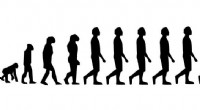
1. Fossil Record: Fossils show a gradual progression of life forms over time, with increasingly complex organisms appearing later. Transitional fossils provide evidence of intermediate forms, linking ancient and modern species. For example, Archaeopteryx, a fossil with features of both birds and reptiles, supports the evolutionary link between these groups.
2. Comparative Anatomy: Anatomical similarities between different animal species, known as homologous structures, suggest a common ancestry. For example, the forelimbs of humans, whales, bats, and birds have a similar bone structure despite performing different functions. This suggests they evolved from a common ancestor with that bone arrangement.
3. Molecular Biology: Comparing DNA and protein sequences across different species reveals striking similarities. The more closely related two species are, the more similar their DNA and proteins. This genetic evidence strongly supports the concept of a common ancestor.
4. Developmental Biology: Embryonic development often shows similarities across species, with early stages resembling each other even if the adult forms are very different. These similarities point to a shared developmental pathway and common ancestry.
5. Biogeography: The distribution of animal species on Earth reflects their evolutionary history and suggests common ancestry. For example, the unique diversity of marsupials in Australia is explained by their isolation and evolution over millions of years.
6. Experimental Evidence: Experiments have shown that evolution can occur over relatively short periods of time, even within a single generation. This provides direct evidence for the mechanisms of evolution and strengthens the idea of a common ancestor for all life.
The scientific consensus is that all animals share a common ancestor due to the overwhelming evidence from multiple fields of science. This evidence has been rigorously tested and supported by numerous studies over decades.