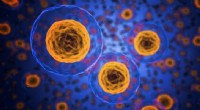
* All living organisms are made up of cells: Whether you're looking at a single-celled bacteria or a complex human being, all living things are composed of cells. Even viruses, which are not considered truly alive, require a host cell to replicate.
* Cells carry out all the functions necessary for life: Cells are self-contained units that can perform all the essential activities of life, including:
* Metabolism: Taking in nutrients, converting energy, and eliminating waste.
* Growth and repair: Increasing in size and replacing damaged components.
* Reproduction: Creating new cells through cell division.
* Response to stimuli: Reacting to changes in their environment.
* Homeostasis: Maintaining a stable internal environment.
* Cells can exist independently: Single-celled organisms (like bacteria and amoeba) can survive and reproduce on their own, demonstrating that a cell is the smallest unit capable of carrying out all life processes.
* Multicellular organisms are complex systems of cells: More complex organisms are made up of specialized cells that work together to form tissues, organs, and organ systems. These systems function as a whole, but their individual parts are still dependent on the basic functions of each cell.
In essence, cells are the fundamental building blocks of life, possessing all the essential features for survival and reproduction. They are the smallest unit that can be considered "alive" and are responsible for the diversity and complexity of life on Earth.