The Main Levels of Classification (from broadest to most specific):
1. Domain: The broadest category, encompassing the three main domains of life:
* Bacteria: Single-celled organisms without a nucleus
* Archaea: Single-celled organisms with unique biochemistry, often found in extreme environments
* Eukarya: Organisms with cells containing a nucleus (includes plants, animals, fungi, and protists)
2. Kingdom: Within each domain, there are multiple kingdoms. Examples include:
* Plantae: Plants
* Animalia: Animals
* Fungi: Fungi
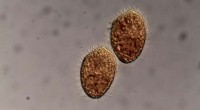
* Protista: Single-celled eukaryotes
3. Phylum: A group of closely related classes.
* Examples: Chordata (animals with a backbone)
* Arthropoda (insects, spiders, crustaceans)
4. Class: A group of closely related orders.
* Examples: Mammalia (mammals)
* Aves (birds)
5. Order: A group of closely related families.
* Examples: Carnivora (meat-eating mammals)
* Primates (monkeys, apes, humans)
6. Family: A group of closely related genera.
* Examples: Felidae (cats)
* Canidae (dogs, wolves)
7. Genus: A group of closely related species.
* Examples: *Canis* (dogs, wolves, coyotes)
* *Panthera* (lions, tigers, leopards)
8. Species: The most specific level, defining a group of organisms that can interbreed and produce fertile offspring.
* Examples: *Canis lupus* (gray wolf)
* *Panthera leo* (lion)
Key Features of the System:
* Hierarchical: Each level is nested within the one above it.
* Binomial Nomenclature: Every species is given a two-part scientific name, the genus and species, written in italics (e.g., *Homo sapiens*).
* Based on Evolutionary Relationships: The system reflects the evolutionary history of life, grouping organisms based on shared characteristics and ancestry.
How Scientists Use Taxonomy:
* Organize Information: Allows scientists to organize and classify the vast diversity of life on Earth.
* Identify Species: Helps scientists identify and distinguish between different species.
* Study Relationships: Provides a framework for understanding evolutionary relationships between organisms.
* Communicate: Establishes a universal language for scientists worldwide to communicate about living things.
Important Note: The classification system is constantly evolving as scientists learn more about the relationships between organisms. New evidence may lead to changes in how species are grouped.