1. Understand and Explain:
* Break down complex systems: Models help us isolate and understand the individual components and interactions within a system, making it easier to grasp the overall behaviour.
* Test hypotheses: Models can be used to predict the outcome of experiments or real-world scenarios based on our hypotheses. This helps us test our understanding and refine our theories.
* Communicate complex ideas: Models provide a visual and simplified way to explain scientific concepts to others, fostering understanding and collaboration.
2. Make Predictions:
* Forecast future events: Models can be used to simulate the behaviour of a system over time, allowing us to make predictions about its future state. This is crucial in areas like climate science, weather forecasting, and disease modelling.
* Optimize designs: Models can be used to test different designs and parameters, allowing us to find the most efficient and effective solutions. This is valuable in fields like engineering, medicine, and technology.
3. Conduct Experiments:
* Safely study dangerous systems: Models allow us to study potentially dangerous systems, like nuclear reactors or chemical reactions, without risking human lives or causing environmental harm.
* Control variables: Models allow us to isolate and manipulate specific variables, making it easier to determine their impact on the system. This is important for understanding cause-and-effect relationships.
* Repeat experiments: Models can be easily replicated and modified, allowing us to conduct multiple experiments under different conditions and analyze the results with greater precision.
4. Examples:
* Climate models: Used to predict future climate change based on various scenarios of greenhouse gas emissions.
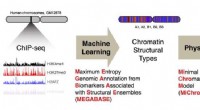
* Computer simulations: Used in various fields, such as drug development, material science, and engineering, to test and optimize designs.
* Mathematical models: Used to describe the spread of diseases, analyze economic trends, and predict population growth.
Overall, models are powerful tools that help scientists understand, predict, and control complex systems, ultimately driving scientific progress and innovation.