Natural selection is the driving force behind evolution. It's a simple yet powerful process that explains how life on Earth has become so incredibly diverse. Here's how it works:
1. Variation within a population: Every population of organisms contains individuals with slightly different traits. These variations can be due to genetic mutations, random changes in DNA.
2. Competition for resources: Organisms within a population must compete for limited resources like food, water, shelter, and mates.
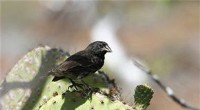
3. Differential survival and reproduction: Individuals with traits that make them better adapted to their environment are more likely to survive, reproduce, and pass on their genes to the next generation. This is the core of natural selection. For example, a bird with a beak better suited to cracking seeds might survive and reproduce more successfully than one with a less adapted beak.
4. Accumulation of favorable traits: Over generations, the frequency of genes associated with beneficial traits increases in the population. Conversely, traits that decrease survival or reproductive success become less common. This gradual change in the genetic makeup of a population is what we call evolution.
Think of it like this:
Imagine a population of rabbits living in a forest. Some rabbits have brown fur, some have white fur. The forest floor is mostly brown. A predator, like a fox, hunts by sight. Which rabbits are more likely to be caught? The white rabbits stand out against the brown background, making them easier prey. Brown rabbits have a survival advantage. They are more likely to survive, reproduce, and pass on their genes for brown fur to their offspring. Over time, the population will shift towards a higher proportion of brown rabbits.
Key points to remember:
* Natural selection acts on existing variation. It doesn't create new traits; it favors those that are already present.
* It is a gradual process. Evolution doesn't happen overnight. It takes many generations for significant changes to occur.
* The environment is the driving force. Natural selection favors traits that are beneficial in a particular environment. What's advantageous in one environment may be harmful in another.
In summary, natural selection is a powerful force that shapes the evolution of life. It's a continuous process of adaptation, where organisms with traits better suited to their environment are more likely to survive and reproduce, leading to the gradual evolution of new species and the incredible diversity of life we see today.