However, we can talk about the general components you'd find inside a stem cell:
* Nucleus: This is the control center of the cell, containing the genetic material (DNA) that dictates the cell's functions and potential.
* Cytoplasm: This is the gel-like substance that fills the cell and contains all the other organelles.
* Organelles: These are tiny structures within the cell that perform specific functions, like producing energy (mitochondria), transporting materials (endoplasmic reticulum), and packaging molecules (Golgi apparatus).
* Cell membrane: This outer layer encloses the cell and controls what enters and exits.
Visualizing the inside of a stem cell:
* Electron microscopy: This powerful technique provides high-resolution images of the cell's internal structure, showing organelles in detail.
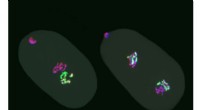
* Fluorescence microscopy: This technique uses fluorescent dyes to label specific molecules within the cell, allowing researchers to track their location and movement.
What makes stem cells unique?
Stem cells are unique because they have the potential to develop into many different types of cells. This is reflected in their internal structure, which often contains:
* High levels of transcription factors: These proteins regulate gene expression, giving stem cells the ability to activate different genes needed for different cell types.
* Specific signaling pathways: These pathways control cell growth, differentiation, and survival, enabling stem cells to respond to signals that tell them what type of cell to become.
To summarize, the inside of a stem cell is a complex world of tiny structures working together to maintain the cell's function and its potential to develop into specialized cells.