* Fossil Record: Fossils show a clear progression of life forms over time, with simpler organisms appearing earlier and more complex organisms appearing later. This pattern is consistent with the idea of gradual change over millions of years.
* Comparative Anatomy: Similarities in the anatomy of different species, even those that seem very different on the surface, suggest they share a common ancestor. For example, the bones in a human arm are remarkably similar to those in a bat wing and a whale flipper.
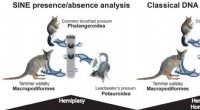
* Molecular Biology: Comparisons of DNA and protein sequences between different species reveal close relationships between organisms that are not readily apparent based on their external appearances. This evidence points to a shared ancestry and supports the idea of common descent.
* Biogeography: The distribution of species across the globe can be explained by evolutionary processes. For example, the presence of similar species on islands separated by vast distances suggests that they evolved from a common ancestor that migrated to the islands.
* Direct Observation: Scientists have observed evolution happening in real time, particularly in rapidly evolving organisms like bacteria and viruses. This provides direct evidence for the ongoing process of evolution.
Important Notes:
* Evolutionary theory is not a belief system, but a scientific theory. This means it is a well-supported explanation for natural phenomena that has been repeatedly tested and confirmed through observation and experimentation.
* The theory of evolution is constantly being refined and updated as new evidence emerges. However, the core principles of evolution—descent with modification and natural selection—have stood the test of time and are widely accepted by the scientific community.
Therefore, biologists don't "believe" in evolution; they accept it as the best available explanation for the origin and diversification of life on Earth, supported by a vast and growing body of evidence.