1. Explains the Shared Ancestry of All Life:
* Common Descent: Evolution posits that all living things share a common ancestor. This means all species are related, branching off from a single lineage over vast periods of time. This shared heritage explains why we see similarities in DNA, anatomy, and biochemistry across diverse life forms.
* The Tree of Life: Evolutionary relationships are depicted in a branching tree diagram, showing how species have diverged and evolved through time. This tree illustrates the connectedness of all living organisms and the paths of their evolution.
2. Mechanism for Change and Adaptation:
* Natural Selection: Evolutionary change is driven by natural selection. Individuals with traits that are advantageous in their environment are more likely to survive and reproduce, passing on those traits to their offspring. Over generations, these advantageous traits become more common, leading to the gradual adaptation of a species.
* Environmental Pressure: Different environments present different challenges. Natural selection favors traits that help organisms survive and reproduce in their specific habitat. This leads to the development of diverse adaptations, from the camouflage of a chameleon to the streamlined body of a dolphin.
3. Explains the Origin of New Species:
* Speciation: Over time, populations can become isolated or experience different environmental pressures. This can lead to the accumulation of genetic differences and the emergence of new species. Speciation is a key driver of biodiversity, leading to the vast array of species we see today.
4. Explains the Fossil Record:
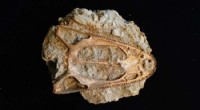
* Fossil Evidence: The fossil record provides strong evidence for evolution. Fossils show a progression of life forms over time, with transitional species that bridge the gap between ancient and modern organisms. This record demonstrates the gradual changes that have occurred through evolution.
5. Underpins Modern Biological Research:
* Medical Advancements: Understanding evolution allows us to trace the origin of diseases, predict the spread of infectious agents, and develop effective vaccines and treatments.
* Conservation Efforts: Evolution informs conservation efforts by highlighting the interconnectedness of species and the importance of preserving biodiversity.
In summary, evolution is the unifying theory that explains the diversity of life on Earth. It provides a framework for understanding the origin and history of all living things, the mechanisms of change and adaptation, and the processes that have led to the incredible range of species we see today.