* Traditional View: Science is often associated with labs, experiments, and controlled environments. This is a crucial part of science, but it's not the only part.
* Beyond the Lab: Science encompasses observing the natural world, asking questions, exploring patterns, and seeking explanations. This happens:
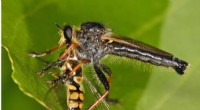
* In the field: Ecologists studying ecosystems, geologists examining rock formations, astronomers observing celestial objects.
* In everyday life: A cook experimenting with recipes, a gardener observing plant growth, a child exploring the properties of water.
* Through technology: Scientists use computers to analyze data, develop models, and simulate complex systems.
* The Big Picture: Science is a way of thinking and exploring the world, not just a place or activity. It's about curiosity, questioning, and seeking evidence-based answers.
Examples:
* A birdwatcher observing migration patterns: This is field science, not limited to a lab.
* A historian analyzing historical documents: This is a form of scientific inquiry, even though it doesn't involve test tubes.
* A programmer designing a new algorithm: This is scientific problem-solving, applying logic and creativity.
In essence, science is about understanding the world around us, and that understanding can be gained through various means, not just within the walls of a laboratory.