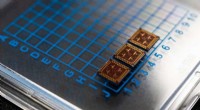
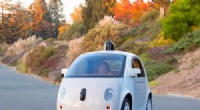
1. Physical Models: These are tangible representations of a real-world object or phenomenon. They can be scaled up or down, and often used for demonstration, testing, or experimentation.
* Examples:
* A model airplane used in a wind tunnel
* A globe representing the Earth
* A plastic skeleton used in anatomy class
* A Lego model of a molecule
2. Conceptual Models: These are abstract representations of a system or process, often expressed through diagrams, graphs, or mathematical equations. They focus on the relationships and interactions between different elements, rather than the physical appearance.
* Examples:
* The Bohr model of the atom
* A food web showing trophic levels
* A diagram of the water cycle
* A mathematical equation describing the relationship between force, mass, and acceleration
3. Computer Models: These are simulations created using computer programs that can represent complex systems and predict future outcomes. They are often used for analyzing data, testing hypotheses, and making predictions.
* Examples:
* Climate models used to predict changes in global weather patterns
* Computer simulations of galaxy formation
* Models used in drug discovery to test the effectiveness of new medicines
It's important to remember that all models are simplifications of reality. They are tools for understanding and explaining phenomena, and should not be taken as exact replicas of the real world.