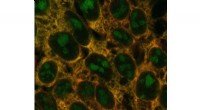
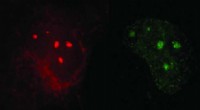
1. Biology: The most common meaning refers to the basic unit of life. All living organisms are made up of cells. They are the smallest unit that can carry out all the processes necessary for life, such as:
* Taking in nutrients: Cells absorb nutrients from their environment and break them down for energy.
* Producing energy: Cells generate energy through processes like cellular respiration.
* Getting rid of waste: Cells remove waste products generated during metabolism.
* Growing and dividing: Cells reproduce to create new cells for growth and repair.
* Responding to stimuli: Cells react to changes in their environment.
2. Prison/Jail: "Cells" can refer to the individual rooms where prisoners are held in a prison or jail.
3. Battery: In the context of batteries, "cells" refer to the individual units that produce electricity.
4. Cellular Network: "Cells" in this context refer to small geographical areas covered by a mobile phone network. Each cell is served by a cell tower, enabling communication between phones.
5. Cellular Automata: This is a mathematical model used in computer science and other fields to simulate complex systems. It consists of a grid of cells, each of which can have a specific state. The state of each cell is determined by the states of its neighbors.
To understand the meaning of "cells" in a specific context, you need to consider the surrounding words and the overall topic.