Here's a breakdown of key characteristics of a scientific system:
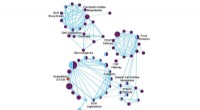
* Interconnected components: A system is made up of multiple parts, which can be physical objects, processes, organisms, or even abstract concepts. These parts are not independent but are linked together through various relationships.
* Interactions and relationships: The components of a system interact with each other in a specific way, creating a dynamic network of cause-and-effect relationships. These interactions can be simple or complex, and can involve energy exchange, information transfer, or material flow.
* Emergent properties: The system as a whole exhibits properties that are not present in its individual components. These emergent properties arise from the interactions between the parts and are often unpredictable based solely on the individual components.
* Boundaries: Systems are often defined by boundaries that separate them from their surroundings. These boundaries can be physical, conceptual, or temporal, and they help us to focus on the specific interactions within the system.
* Purpose or function: Systems are often defined by their purpose or function. This could be a biological process like photosynthesis, a physical process like the water cycle, or a social system like a market economy.
Examples of systems in science:
* The solar system: Composed of the Sun, planets, moons, asteroids, and comets, all interacting through gravitational forces.
* The human body: A complex system of organs and tissues working together to maintain life.
* An ecosystem: Interconnected communities of organisms and their physical environment, interacting through energy flow and nutrient cycling.
* A climate system: Consists of the atmosphere, ocean, land surface, and ice, interacting through energy transfer and circulation.
Understanding systems is crucial in science as it allows us to:
* Analyze complex phenomena: By breaking down complex phenomena into their constituent parts, we can better understand their behavior.
* Predict system behavior: By understanding the interactions within a system, we can make predictions about how it will respond to changes in its environment or inputs.
* Develop interventions: By identifying key components and relationships within a system, we can develop interventions to modify its behavior or achieve desired outcomes.
In essence, a scientific system is a framework for understanding how interconnected components work together to create a larger, more complex entity.