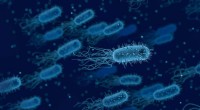
Key differences:
* Nucleus: Prokaryotic cells lack a true nucleus, while eukaryotic cells have a well-defined nucleus that contains their DNA.
* Organelles: Prokaryotic cells have fewer membrane-bound organelles compared to eukaryotic cells.
* DNA structure: Prokaryotic DNA is circular and located in the cytoplasm, while eukaryotic DNA is linear and enclosed within the nucleus.
* Size: Prokaryotic cells are generally smaller than eukaryotic cells.
* Complexity: Prokaryotic cells are simpler in structure and function than eukaryotic cells.
Evolutionary History:
* Prokaryotic cells are believed to have evolved billions of years ago, long before eukaryotic cells.
* Eukaryotic cells are thought to have evolved from prokaryotic cells through a process called endosymbiosis, where smaller prokaryotic cells were engulfed by larger ones and eventually became organelles.
Conclusion:
The simpler structure, lack of a nucleus, and earlier evolutionary origin of prokaryotic cells indicate that they are more primitive than eukaryotic cells.